Visitors to Kraków’s Polish Aviation Museum can get closer to aviation history by stepping inside four historic aircraft, including the helicopter used during Pope John Paul II’s visits to Poland.
There is a difference between looking at an aircraft in a museum and stepping inside it. From the ground, its shape and engineering tell one story. Inside the cabin, the experience becomes more personal: the space available to passengers, the working environment of the crew and the practical details of life aboard an aircraft come into focus.
At the Polish Aviation Museum in Kraków, visitors can explore the interiors of four historic machines: the Mil Mi-8S helicopter associated with Pope John Paul II, the French-built Amiot AAC.1 Toucan, the Soviet-designed Lisunov Li-2 and the Polish PZL-105L Flaming.
Each offers a different perspective on the history of aviation, from wartime transport and post-war military service to a Polish aircraft design that never entered mass production.
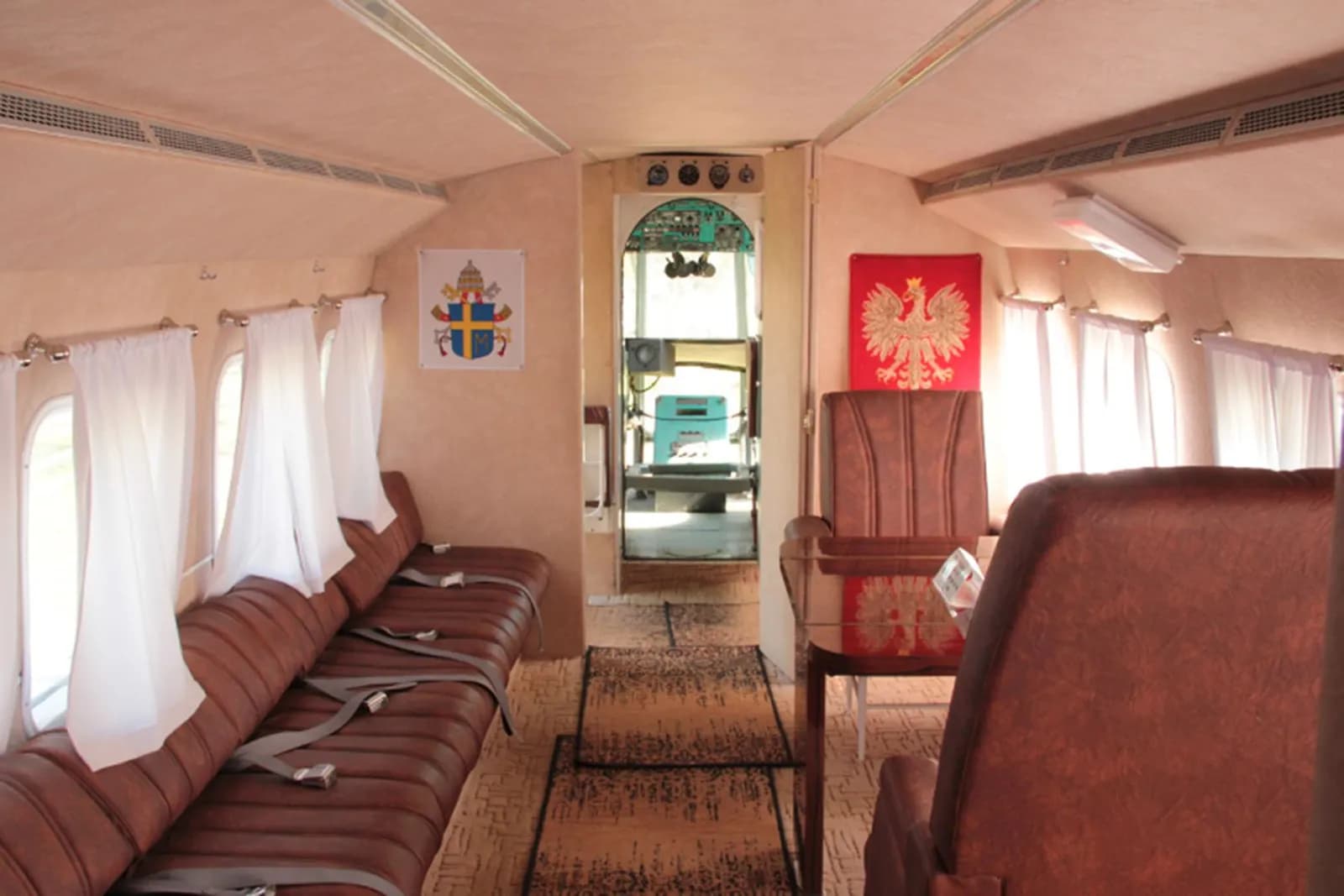
Inside the helicopter associated with Pope John Paul II
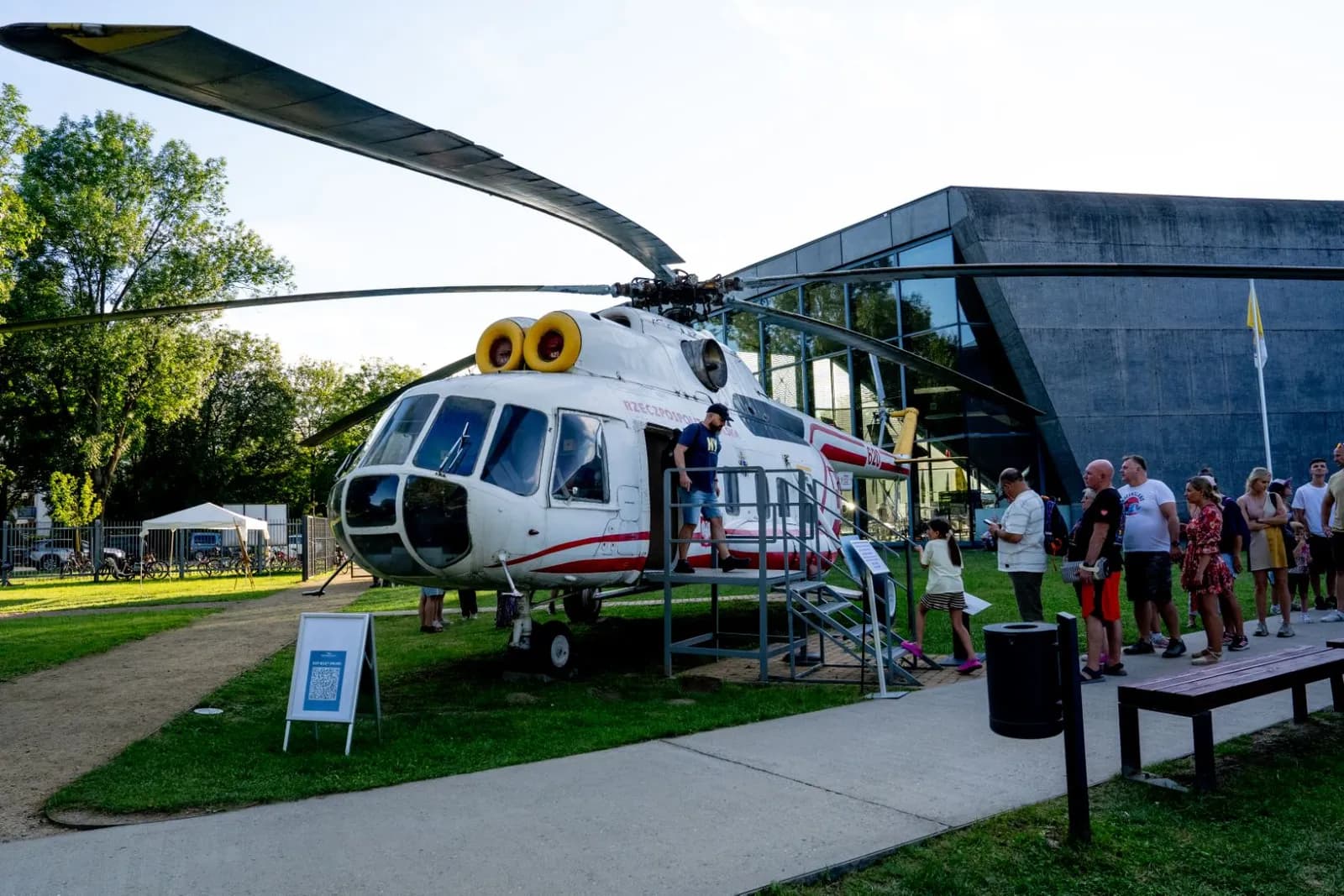
One of the most recognisable exhibits is the Mil Mi-8S, commonly known as the Papal Helicopter.
The museum’s aircraft, numbered 620, was used during Pope John Paul II’s visits to Poland in 1983 and 1997. It was aboard this helicopter that the Pope flew over the Tatra Mountains, connecting the aircraft with a memorable episode in the country’s recent history.
The Mi-8 became one of the most widely used helicopter designs in the world. The Mi-8S variant was configured for passenger and executive transport, with an interior designed to accommodate several people more comfortably than a standard utility configuration.
According to museum director Tomasz Kosecki, visitor research has identified access to historic aircraft interiors as one of the most popular experiences at the museum:
Being able to enter the interior of a historic aircraft offers a completely different sense of connection with history.
He explains:
It allows visitors not only to see the exhibit, but to spend a moment in its space and better understand its function.
The museum’s published schedule states that the helicopter interior is open during October from 10:30 am to 11 am and 2:30 pm to 3 pm. Access is then suspended from November until April to protect the historic interior from moisture.
As these dates are seasonal, visitors should check the museum’s latest information before travelling.
The aircraft nicknamed ‘Aunt Ju’
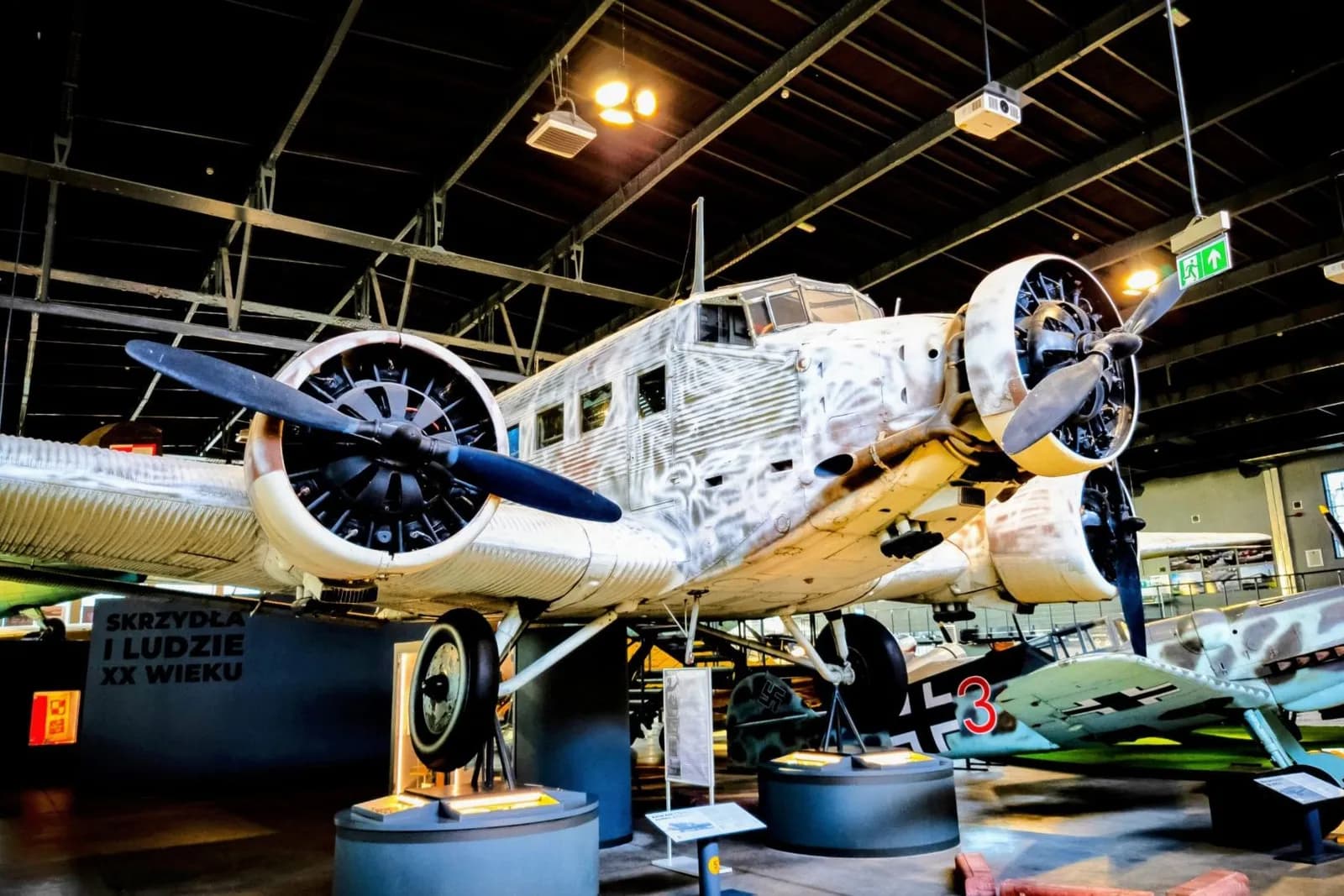
The Amiot AAC.1 Toucan, housed in the museum’s Main Hangar, offers a glimpse inside one of the best-known transport aircraft designs of the early twentieth century.
The Toucan was built in France in 1946, using the design of the German Junkers Ju 52/3m. Nicknamed Tante Ju, or ‘Aunt Ju’, the original aircraft became famous for its distinctive corrugated metal skin, three engines and robust construction.
The museum’s example measures 29.21 metres across the wings and almost 19 metres in length. Its three BMW 132 engines each developed 830 horsepower.
The story of this particular aircraft also reflects the changing political landscape of Europe. Production of the Ju 52 continued in occupied France during the Second World War, and French manufacturers carried on building the aircraft after the conflict. The Toucan later served with the French Air Force and Portuguese aviation before reaching the Imperial War Museum at Duxford. It arrived in Kraków in 2013.
The aircraft’s interior gives visitors a closer look at the space used by passengers and crews during an era when air transport was developing rapidly, but travelling by air remained a very different experience from today.
According to the museum’s published timetable, the interior is open daily from 11:30 am to 12:30 pm and 3:30 pm to 4:30 pm. Visits at other times may be possible as part of a guided tour.
Lisunov Li-2: a transport aircraft with a long service history
The Lisunov Li-2 is another aircraft available for interior visits through the museum’s guided-tour service.
Developed in the Soviet Union from the American Douglas DC-3 design, the Li-2 became an important transport aircraft, adapted to Soviet manufacturing requirements and operating conditions. Production began under the designation PS-84 before the aircraft received the Li-2 name in 1941.
Kraków’s example was built in 1943. It initially served in Soviet aviation before joining the Polish Air Force after the war. Between 1950 and 1974, it was used by the Polish Air Force Officers’ School.
Its final flight took place on 13 May 1974, travelling from Dęblin to Kraków. Ten years later, it became part of the museum’s collection.
With a wingspan of almost 29 metres, a length of around 19 metres and two engines producing 1,000 horsepower each, the Li-2 was built for demanding transport duties. Looking inside helps put those specifications into context, revealing the practical space behind an aircraft that played a significant role in twentieth-century aviation.
Flaming: a Polish design that never reached production
The fourth aircraft is the PZL-105L Flaming, displayed in the museum’s Main Building. Its interior is available to visitors from Tuesday to Sunday during museum opening hours, according to the published information.
Designed as a potential successor to the popular PZL-104 Wilga, the Flaming was intended to serve a variety of roles. These included glider towing, parachute training, transport, patrol duties and medical evacuation.
The prototype flew in 1989, followed by the PZL-105L prototype in 1991, fitted with a new engine. The project also envisaged export sales, particularly to the United States and Canada, but the aircraft never entered series production.
The museum’s example is the third prototype, preserving a chapter of Polish aviation engineering that might otherwise be overlooked.
Its six-seat cabin and wide doors reflected the intention to make the aircraft adaptable to different tasks. Powered by a 360-horsepower M-14P radial engine, the Flaming had a maximum speed of 260km/h and a stated range of 950km.
Inside, visitors can see how the designers approached the challenge of creating a versatile utility aircraft at a time of significant change for Poland’s aviation industry.
For anyone interested in Poland’s aviation heritage, the opportunity to step inside these aircraft offers a closer look at the machines themselves and the very different roles they played in the country’s history.
See more: Aleja MiGów Redevelopment Begins at the Polish Aviation Museum in Kraków