Discover the history of Obwarzanek Krakowski, the iconic ring-shaped bread that has been part of Kraków’s heritage for more than 600 years and remains one of Poland’s most recognisable culinary traditions.
Walk through the streets of Kraków and one sight appears almost everywhere. Hanging from distinctive blue street carts are neatly stacked rings of golden bread, topped with sesame seeds, poppy seeds or coarse salt. For visitors, they are a convenient snack to enjoy while exploring the city’s historic streets. For many residents, they are an everyday tradition that has remained unchanged for generations.
The Obwarzanek Krakowski is far more than a simple bread roll. With a documented history stretching back more than 600 years, it is one of Poland’s oldest recorded bakery products and one of Kraków’s most enduring culinary symbols. Protected under European law and still produced using traditional methods, it continues to connect modern Kraków with its medieval past.
A Tradition Dating Back to 1394
The earliest known reference to the obwarzanek appears in the royal accounts of Queen Jadwiga and King Władysław II Jagiełło on 2 March 1394. The accounts include a payment for “rings” purchased for the Queen, providing one of the earliest written records of this distinctive baked product.
Few everyday foods can trace their origins so precisely. The obwarzanek has remained a familiar part of Kraków life through royal courts, medieval guilds, changing governments and centuries of social change.
Its remarkable longevity makes it not only a local speciality but also an important part of Poland’s culinary heritage.
A Bread Shaped by Medieval Guilds
The history of the obwarzanek is closely linked to Kraków’s powerful medieval bakers’ guild.
In 1496, King John I Albert granted Kraków’s bakers exclusive rights to produce white bread, including obwarzanki. Production was tightly regulated, with only authorised bakers permitted to make them.
Originally, obwarzanki could only be baked during Lent. As regulations evolved, production gradually expanded to include Fridays and other religious fasting days before eventually becoming available throughout the year.
These strict rules helped establish high standards of quality and consistency, traditions that continue to influence production today.
What Makes the Obwarzanek Unique?
Although it is sometimes compared with bagels or pretzels, the obwarzanek has its own distinctive identity.
Its name comes from the Polish verb obwarzać, meaning “to parboil”. Before baking, each ring of dough is briefly boiled, creating the characteristic glossy crust and chewy texture that distinguishes it from ordinary bread.
Traditional production remains largely unchanged.
The process involves:
- Preparing wheat dough
- Rolling it into long strands
- Twisting two or three strands together
- Joining the ends into a ring
- Allowing the dough to rise
- Briefly boiling the dough
- Adding traditional toppings
- Baking until golden brown
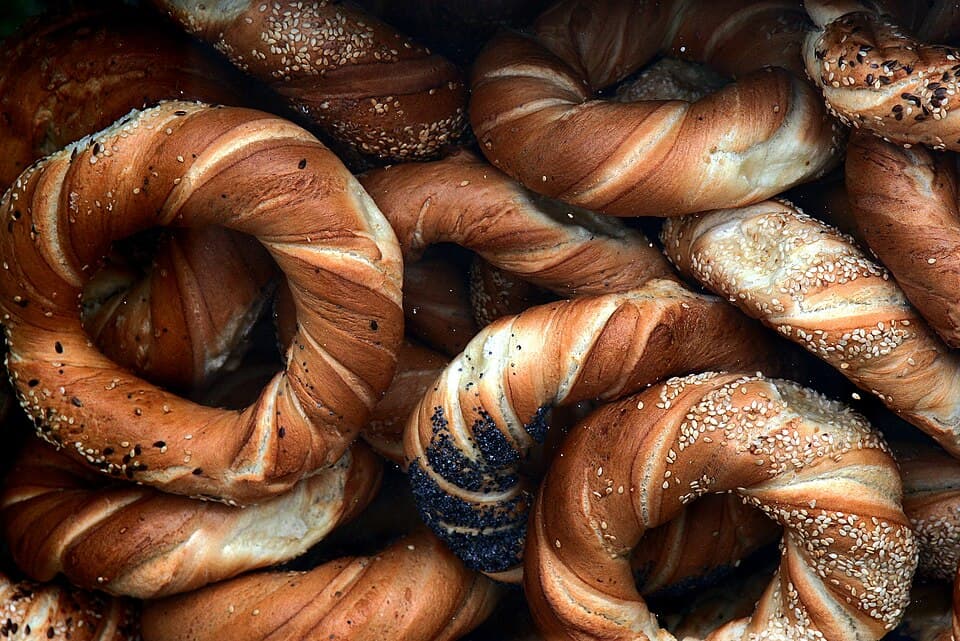
The finished product has a crisp exterior, a soft and slightly chewy interior and a distinctive braided appearance that is instantly recognisable.
Simple Ingredients, Distinctive Flavour
Authentic Obwarzanek Krakowski is deliberately uncomplicated.
Traditional toppings include:
- Poppy seeds
- Sesame seeds
- Coarse salt
While modern variations featuring cheese, herbs, onion or black cumin have become increasingly popular, the classic versions remain the favourites for many Kraków residents.
The bread is typically enjoyed fresh on its own, making it an ideal snack while walking through the city’s streets or relaxing in one of its parks.
Protected as Part of Europe’s Culinary Heritage
In 2010, Obwarzanek Krakowski was awarded Protected Geographical Indication (PGI) status by the European Union.
This designation means that only obwarzanki produced according to the official specification within the designated geographical area, including the City of Kraków and parts of the surrounding region, may legally use the name.
The protection helps preserve traditional production methods while safeguarding the reputation of one of Poland’s best-known regional foods.
For consumers, the PGI designation provides confidence that the product they are buying meets strict quality and authenticity standards.
The Blue Street Carts of Kraków
One of the most distinctive features of the obwarzanek tradition is the way it is sold.
Across central Kraków, particularly around Rynek Główny, Planty Park, Wawel Castle and the city’s busiest pedestrian routes, licensed vendors sell freshly baked obwarzanki from their characteristic blue carts.
These stalls have become almost as recognisable as the bread itself and form part of the city’s everyday streetscape.
Unlike many foods that have become tourist attractions primarily, the obwarzanek remains firmly rooted in local daily life. Office workers, students, families and visitors alike can often be seen enjoying one while walking through the city.
Discovering the Obwarzanek First Hand
Those wishing to explore the tradition in greater depth can visit the Living Museum of the Obwarzanek, where visitors learn about the bread’s long history, observe the traditional baking process and even make their own obwarzanek under expert guidance.
The museum offers an engaging introduction to one of Kraków’s oldest surviving culinary traditions and provides valuable insight into the craftsmanship behind every freshly baked ring.
More Than Just Street Food
The Obwarzanek Krakowski represents far more than a convenient snack.
It reflects centuries of skilled craftsmanship, the influence of medieval guilds, the importance of regional food traditions and the enduring connection between Kraków’s past and present.
In a city celebrated for its royal history, remarkable architecture and vibrant cultural scene, this humble ring of bread continues to play an important role in everyday life. It is a reminder that some of the strongest symbols of a place are often found not only in its monuments but also in the traditions that local people continue to enjoy every day.
Whether purchased from a blue street cart during a morning walk through the Old Town or sampled as part of a visit to the Living Museum, the Obwarzanek Krakowski remains one of the most authentic and memorable tastes of Poland’s former royal capital.
Discover more fascinating Krakow history here!