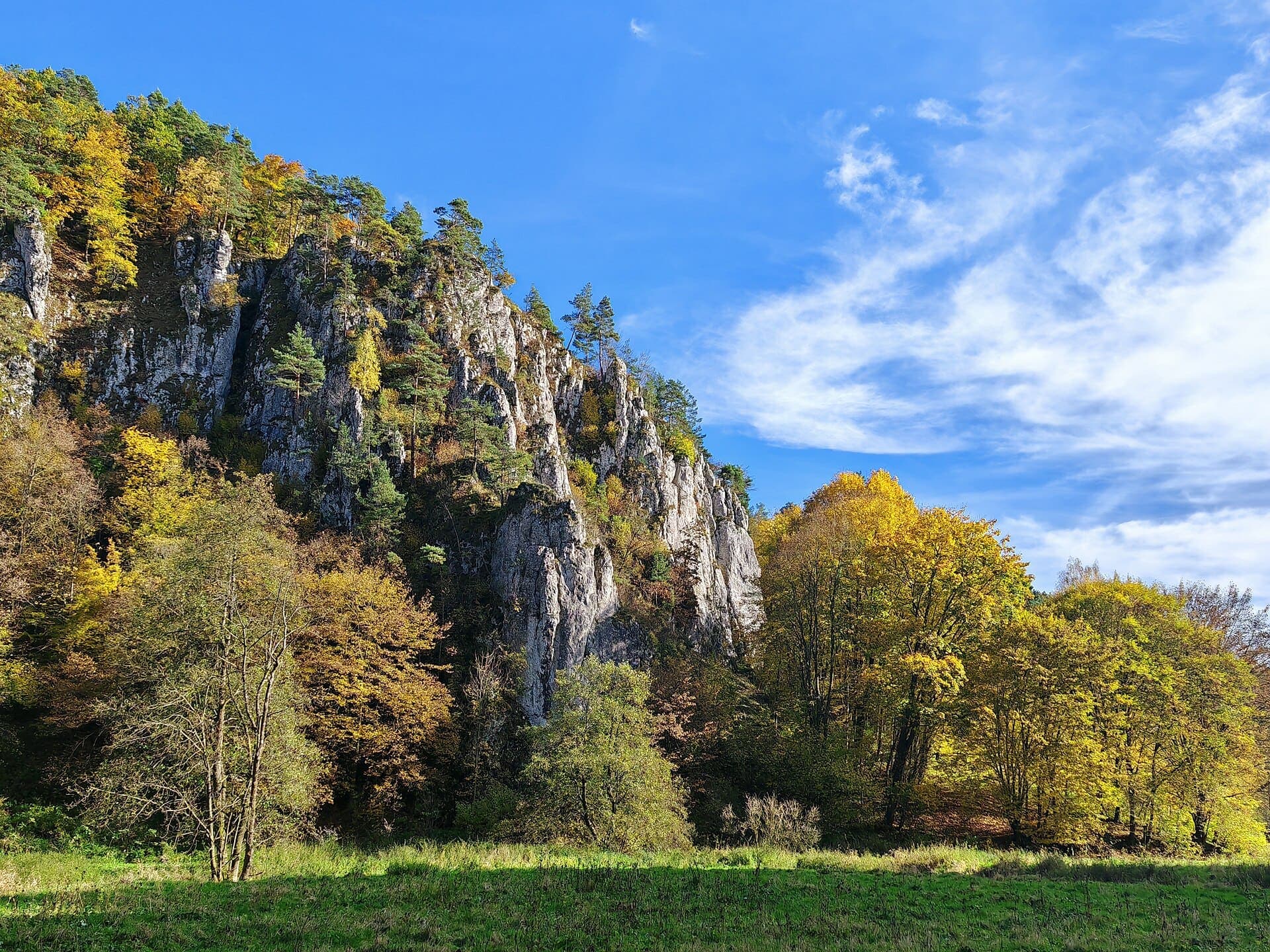
Just a short drive north of Kraków lies one of Poland’s most remarkable landscapes. Ojców National Park may be the country’s smallest national park, but what it lacks in size it more than makes up for in natural beauty, history, and wildlife.
Established in 1956, the park protects just over 21 square kilometres of the Kraków-Częstochowa Upland, a region known for its dramatic limestone cliffs, hidden caves and picturesque river valleys. It is an easy day trip from the city, offering the chance to swap bustling streets for peaceful woodland trails, medieval castles and some of Poland’s most distinctive rock formations.
A Landscape Shaped Over Millions of Years
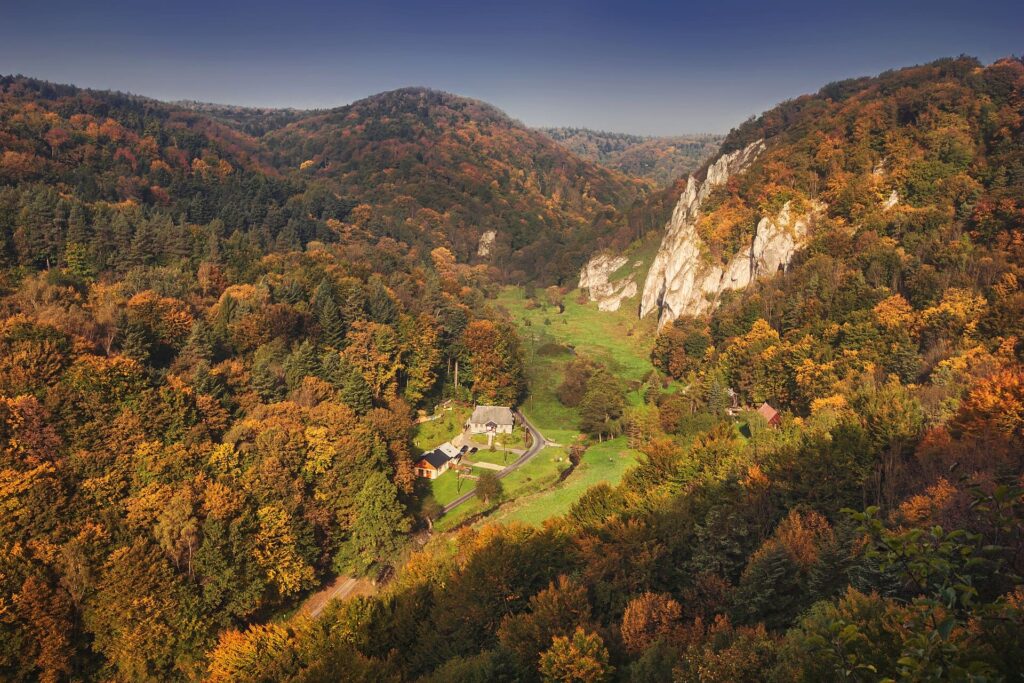
Ojców National Park is centred around the Prądnik Valley, where water has slowly carved its way through Jurassic limestone to create an extraordinary karst landscape.
Today, visitors can explore towering white cliffs, narrow gorges, natural rock gates and nearly 700 caves scattered throughout the park. Forests cover much of the protected area, while limestone grasslands provide habitats for rare plants that thrive in the unique geology of southern Poland.
Despite its compact size, the park forms part of the Natura 2000 network, which aims to protect areas where endangered species live, recognising its importance for both biodiversity and conservation.
Famous Rock Formations and Historic Landmarks
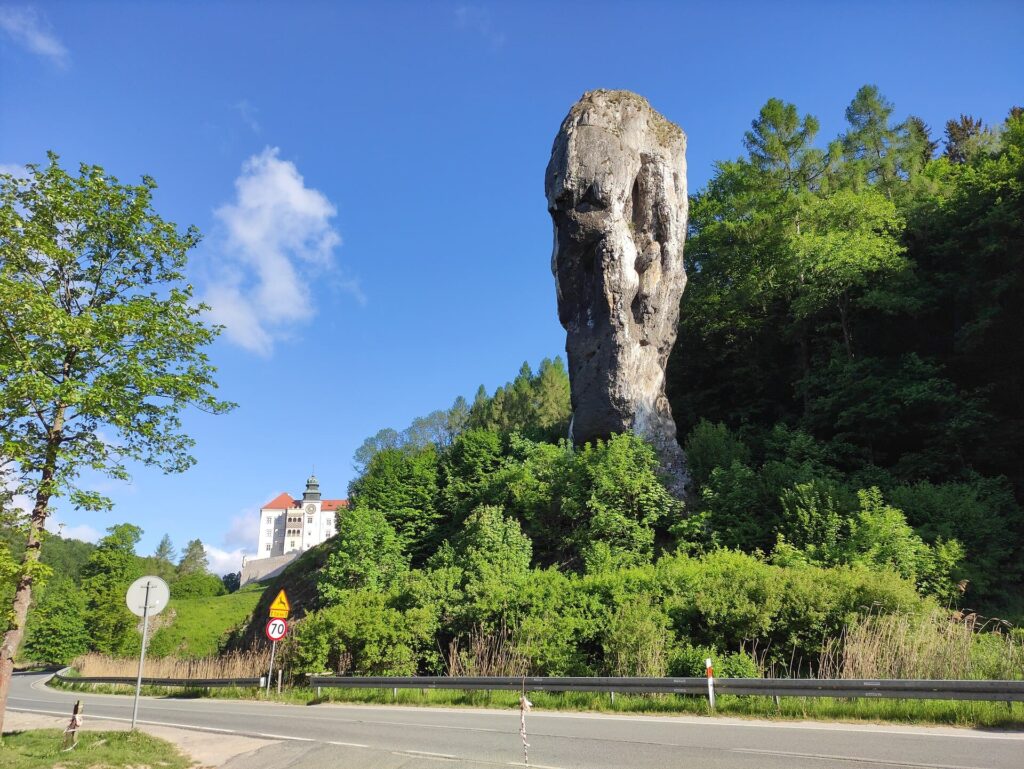
One of the park’s best-known landmarks is Maczuga Herkulesa, or Hercules’ Club, a striking 25-metre limestone pillar that appears to balance improbably on a narrow base. Created entirely by natural erosion, it has become one of the defining images of the Polish Jura.
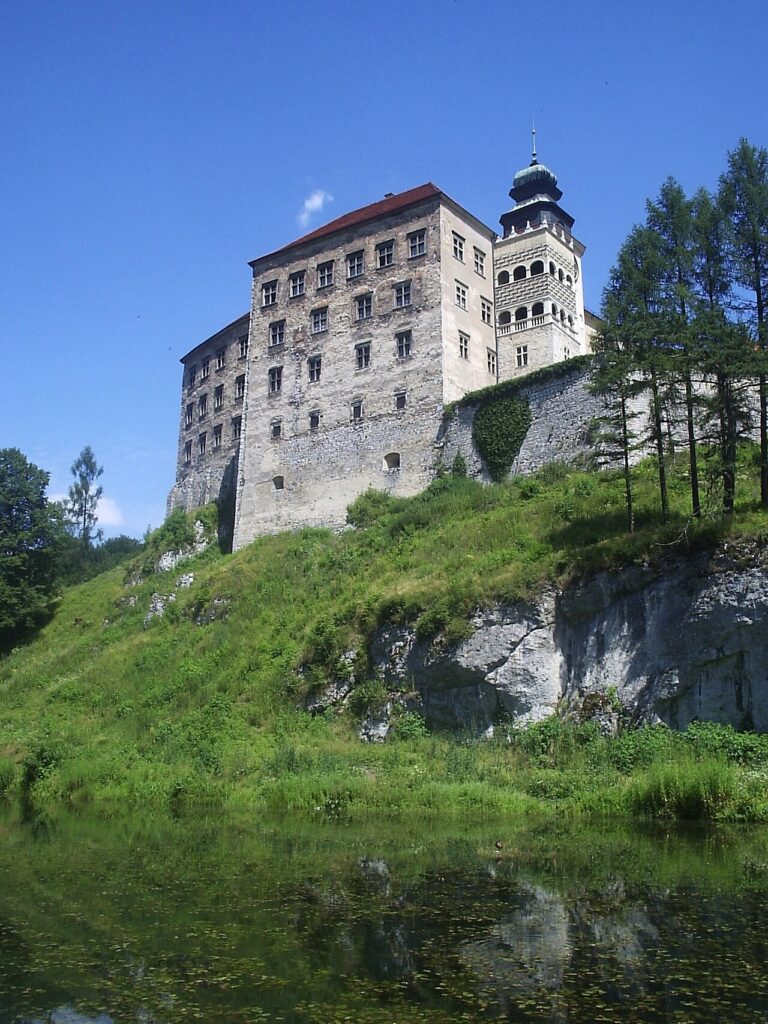
Nearby stands Pieskowa Skała Castle, one of the finest Renaissance castles in Poland and an important stop along the historic Trail of the Eagles’ Nests. The beautifully preserved castle overlooks the valley and offers museum exhibitions, elegant courtyards and sweeping views across the surrounding countryside.
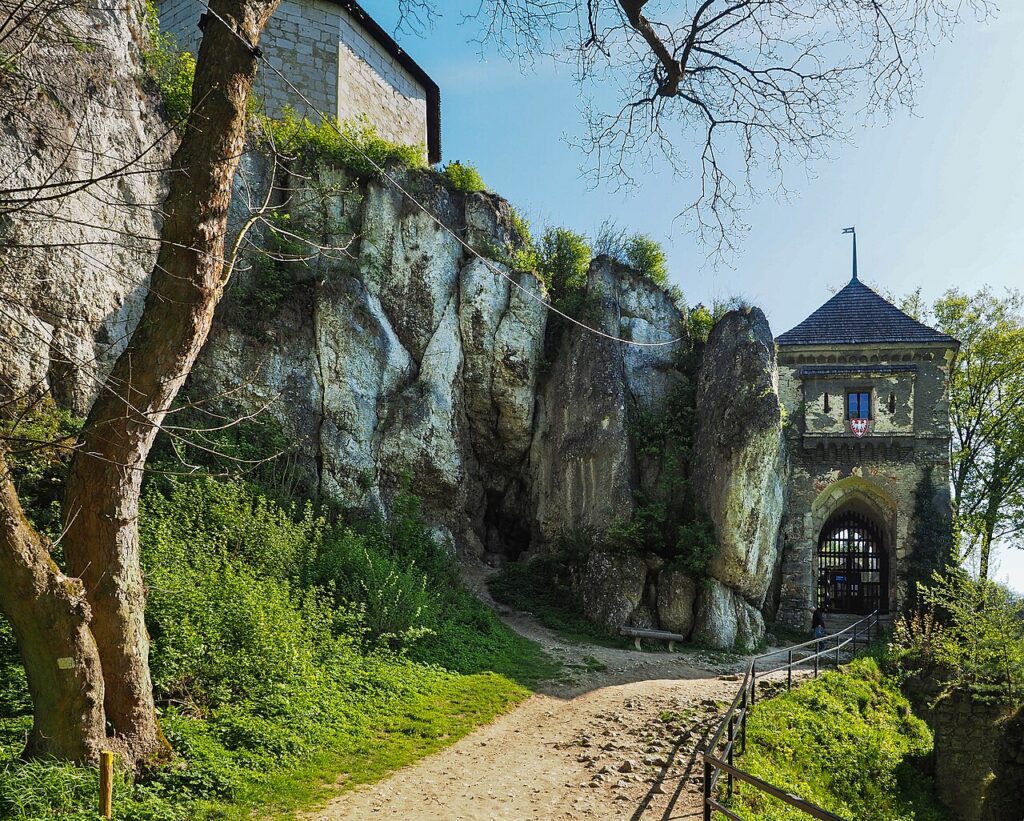
Further south, the ruins of Ojców Castle tell the story of medieval Poland. Built during the reign of King Casimir III the Great in the 14th century, the fortress once formed part of a defensive chain protecting the approaches to Kraków.
Exploring the Park’s Legendary Caves
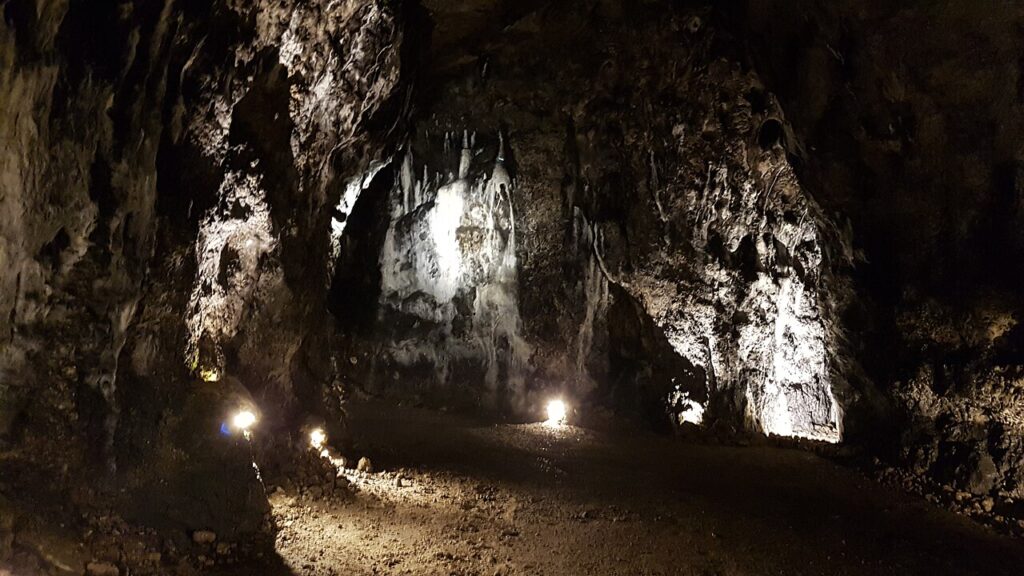
The limestone beneath Ojców National Park has been shaped into an extensive network of caves, many of which have fascinated explorers for centuries.
The most famous is Łokietek Cave, linked to the legend of King Władysław Łokietek, who is said to have hidden inside while escaping enemy forces. According to local folklore, a spider spun its web across the entrance, convincing pursuing soldiers that nobody had entered.
Another important site is Ciemna Cave, where archaeologists discovered evidence of Neanderthal occupation dating back more than 100,000 years. Stone tools and ancient animal remains found here have made it one of Poland’s most significant prehistoric sites.
Wildlife in Poland’s Smallest National Park
Although modest in size, Ojców National Park supports an impressive variety of wildlife.
The park’s official symbol is the bat, with 21 recorded species making use of its caves and woodland habitats. Visitors may also encounter roe deer, foxes, badgers and pine martens, while birdwatchers have opportunities to spot eagle owls, woodpeckers, buzzards and kingfishers.
Botanists are equally well served. Ancient beech woods, mixed oak forests and limestone meadows provide habitats for more than 1,000 species of plants, including several rare orchids.
Walking Through the Prądnik Valley
With around 45 kilometres of marked walking trails, Ojców National Park is ideal for visitors looking for anything from a gentle stroll to a full day’s hiking.
One of the most popular routes follows the Prądnik Valley past the charming Chapel on the Water, the ruins of Ojców Castle and the impressive Kraków Gate, a towering natural limestone arch that frames one of the park’s best-known viewpoints.
More adventurous walkers often continue to Łokietek Cave before heading north towards Pieskowa Skała Castle and Hercules’ Club.
Autumn is widely regarded as one of the most spectacular times to visit, when the valley’s forests are transformed by rich shades of gold, amber and crimson.
A Perfect Day Trip from Kraków
One of Ojców National Park’s greatest attractions is its accessibility. Located around 16 kilometres from Kraków, it can be reached in approximately 30 to 40 minutes by car, while regional buses and organised tours also provide convenient options for visitors.
Its combination of dramatic scenery, fascinating history and well-maintained walking routes makes it equally appealing to families, photographers, history enthusiasts and anyone seeking a peaceful escape from the city. Ojców National Park offers a refreshing reminder that some of southern Poland’s most impressive landscapes are only a short journey away.
More nature to explore in Kraków here!