Kraków's museums offer far more than collections behind glass, revealing the city's history, artistic traditions and continuing cultural conversation.
Kraków is a city where centuries of history sit alongside an active contemporary cultural scene, and its museums reflect that breadth. Across the city, visitors can move from Polish art and local traditions to Japanese aesthetics and experimental contemporary work.
Five institutions in particular offer distinct perspectives on the culture and history that continue to shape Kraków.
MOCAK: Contemporary Art in a Historic Setting
The Museum of Contemporary Art in Kraków, known as MOCAK, occupies the former Oskar Schindler factory in the Zabłocie district. Designed by Italian architect Claudio Nardi, its neo-modernist architecture incorporates the industrial character of the site.
The museum's collection has grown to more than 5,000 works by several hundred Polish and international artists, with particular attention given to Polish art from the second half of the 20th century and its relationship with international artistic developments.
Works by artists including Marina Abramović, Ai Weiwei and Edward Dwurnik have featured alongside rotating temporary exhibitions.
MOCAK's setting gives the museum an additional historical dimension. The former factory halls, once associated with the difficult history of the Second World War, now provide a space for contemporary artistic expression.
Address: ul. Lipowa 4, Kraków
Opening Hours: Tuesday–Sunday, 11:00–19:00
National Museum in Kraków: A Broad View of Polish Art
The National Museum in Kraków offers a much wider journey through Polish art and cultural heritage. Its collections contain hundreds of thousands of objects across nine divisions located throughout the city.
The institution brings together material ranging from medieval religious art to contemporary works, allowing visitors to explore changing forms of Polish artistic expression across the centuries.
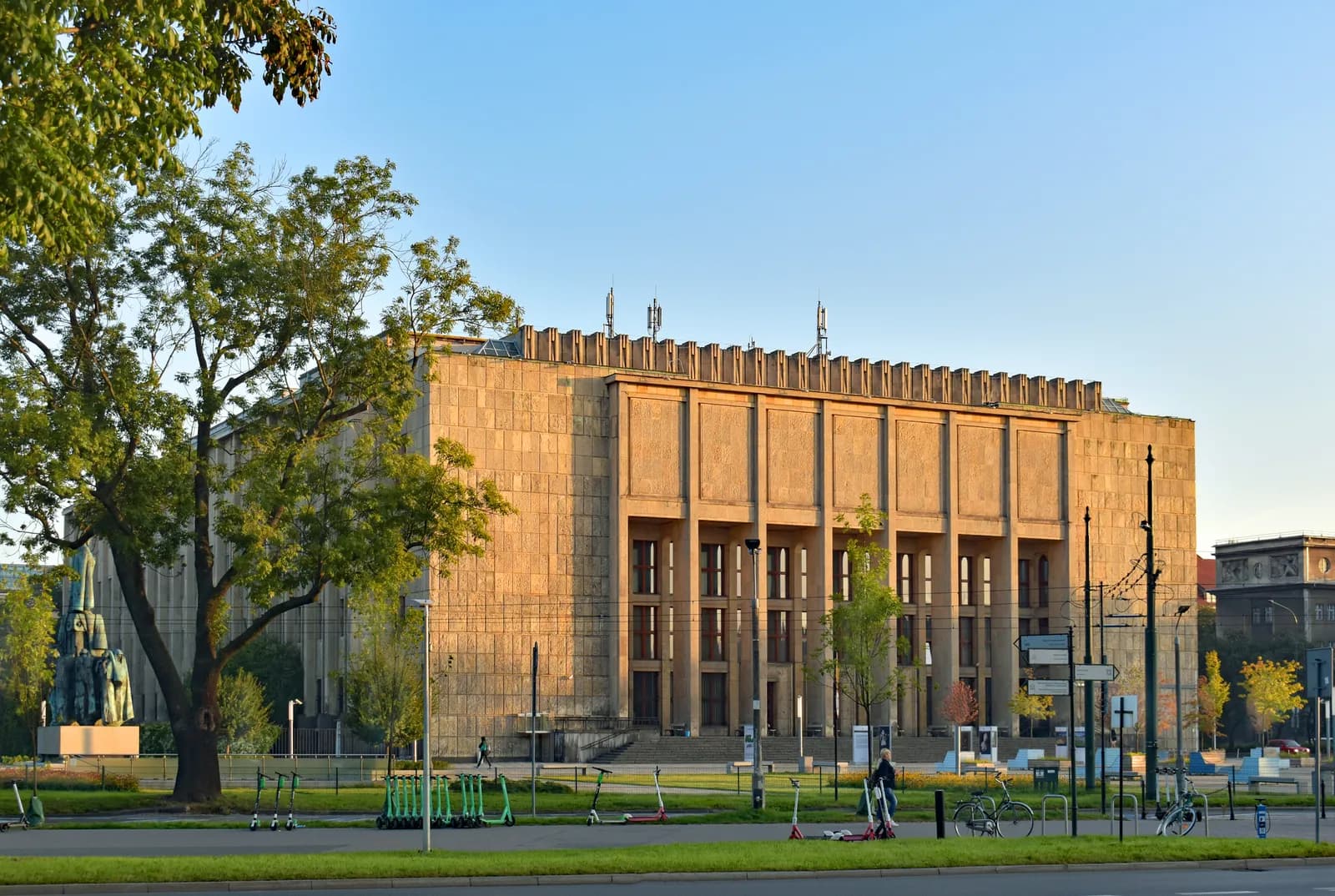
Its main building at al. 3 Maja is complemented by branches dedicated to particular periods, artists and heritage sites. The museum's approach also places Polish art within wider European and international contexts, showing how artistic ideas have developed across borders.
For visitors wanting to explore the breadth of Poland's artistic heritage, the National Museum provides a substantial introduction while offering enough material to reward return visits.
Address: al. 3 Maja 1, 30-062 Kraków
Opening Hours: Tuesday–Sunday, 9:00–17:00; Monday closed
Admission: Free admission to permanent exhibitions on Sundays
Museum of Kraków: Understanding the City Itself
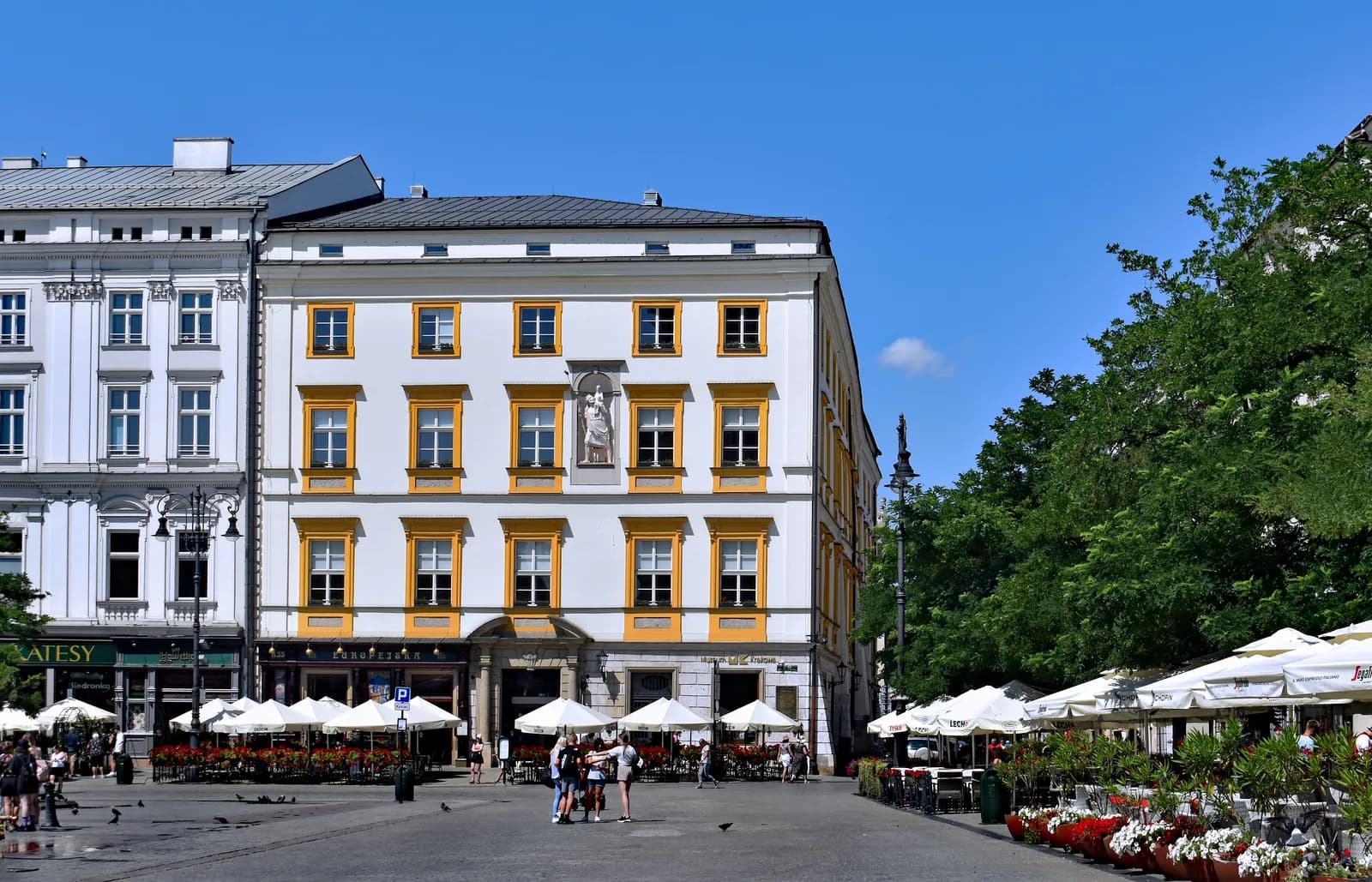
At Krzysztofory Palace on the Main Market Square, the Museum of Kraków turns its attention directly towards the city's own story.
Its main exhibition, Kraków from the beginning, to no end, traces the city from its prehistoric and mythical beginnings through to the modern era. Its final exhibition piece changes in response to current events in Kraków, reflecting the idea that the city's history is still being written.
The museum is also closely connected with one of Kraków's most distinctive traditions: nativity scenes, or szopki. The city's nativity scene tradition was inscribed on UNESCO's Representative List of the Intangible Cultural Heritage of Humanity in 2018.
Krzysztofory Palace itself has been renovated and now functions as more than an exhibition space, hosting concerts, literary meetings, debates, educational workshops and conferences.
Address: Rynek Główny 35, Kraków
Opening Hours: Tuesday–Sunday, 10:00–18:00; Monday closed
Admission: Free admission to the permanent exhibition on Tuesdays
Manggha: A Window into Japanese Culture
The Manggha Museum of Japanese Art and Technology offers a different cultural perspective within Kraków.
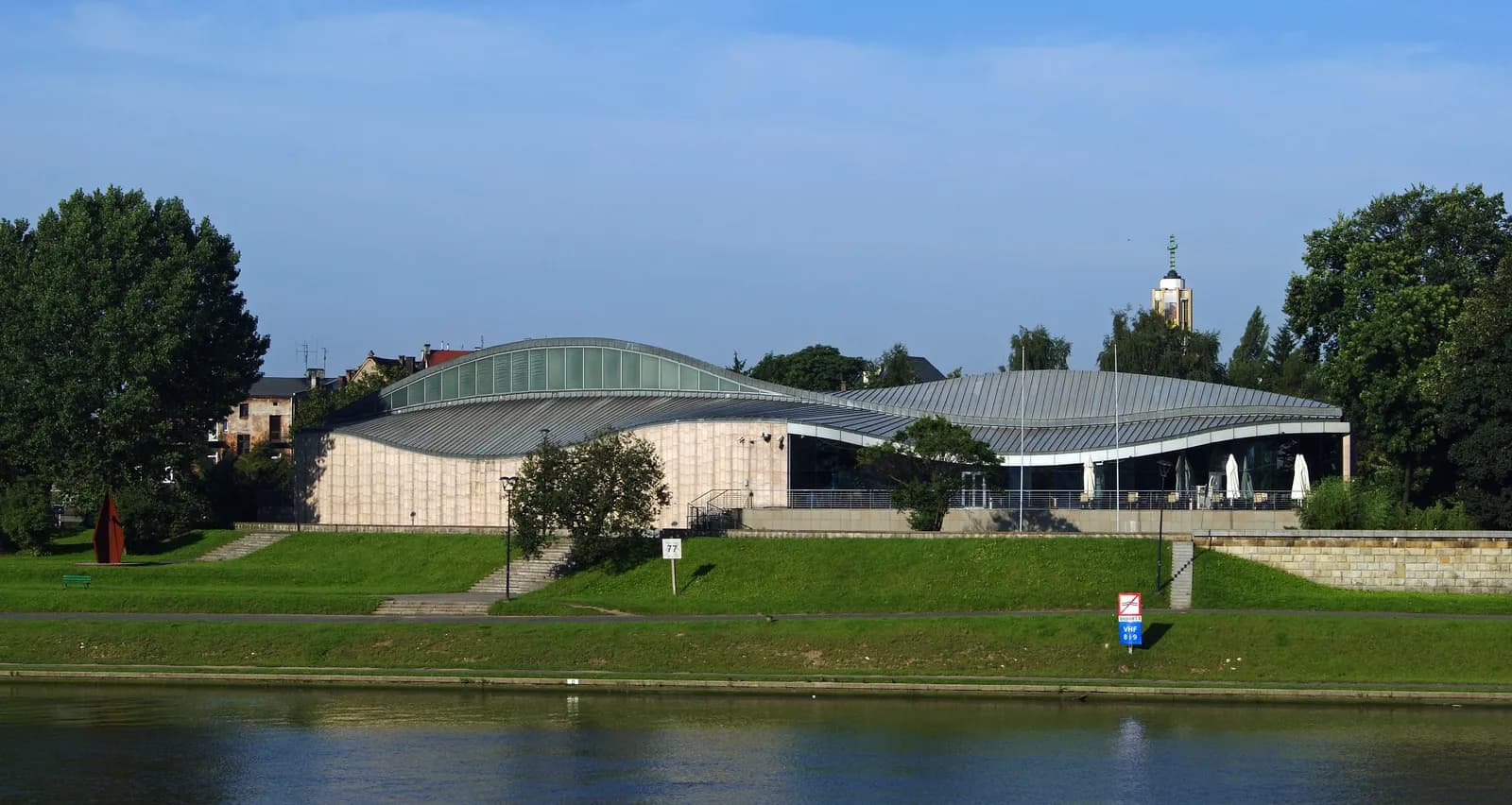
Located on M. Konopnickiej Street in the Dębniki district, the museum was established in 1965 around a collection donated by Feliks Jasieński, a critic, writer and collector who used the name Manggha. His 1920 donation contained around 6,500 works connected with Japanese culture.
The museum continues to explore Japanese artistic traditions through its exhibitions, ranging from ukiyo-e woodblock prints to contemporary work.
Its riverside location is another part of the experience, with views towards Wawel Castle providing a distinctive setting for the museum. The nearby European–Far East Gallery extends its programme of contemporary exhibitions and cultural exchange.
Address: ul. M. Konopnickiej 26, Kraków
Opening Hours: Tuesday–Sunday, 10:00–18:00; Monday closed
Admission: Free admission on Tuesdays
Bunkier Sztuki: Kraków Contemporary Edge
Located at Plac Szczepański in the Old Town, Bunkier Sztuki has been presenting contemporary art since 1965.
Rather than focusing on preserving historic collections, the gallery concentrates on current artistic practice. Its programme has included major Polish artists as well as international practitioners, with a particular interest in avant-garde, experimental and conceptual approaches.
That focus makes Bunkier Sztuki a useful complement to Kraków's museums devoted to historical collections. Here, the emphasis is on artists working within the present and on ideas that challenge established ways of thinking about art.
Its central location also places contemporary artistic practice directly within the historic heart of Kraków.
Address: Plac Szczepański 3a, Kraków
Opening Hours: Tuesday–Sunday, 11:00–19:00; Monday closed
Together, these five institutions demonstrate the breadth of Kraków's cultural landscape. One looks at the city's own history, another at Poland's artistic heritage, while others open conversations with Japanese culture, contemporary international art and experimental practice.
For visitors, that variety offers a way to see Kraków not simply as a historic destination, but as a city where heritage and contemporary culture continue to exist side by side.