Across from one of Kraków's finest Art Nouveau buildings stands a concrete structure that once shocked the city and now defines its contemporary art scene.
Bunkier Sztuki, or "Bunker of Art", occupies an unusual position in Kraków. Set in the historic centre, its raw concrete architecture stands directly opposite the ornate Palace of Art, creating a striking conversation between two very different ideas of what an art building should be.
The gallery's story began before its famous building appeared. In 1950, the Kraków branch of the Central Bureau for Artistic Exhibitions, known as CBWA, was established as a provincial branch of Warsaw's cultural authority. For the next twelve years, it operated under Warsaw's supervision while developing its exhibition programme and collection.
In 1962, the Kraków branch became independent.
Three years later, on 11 September 1965, it moved into the building that would give the institution its distinctive identity.
A Building Designed to Challenge Its Surroundings
Designed by architect Krystyna Tołłoczko-Różyska, with sculptural façade elements by Stefan Borzęcki and Antoni Hajdecki, Bunkier Sztuki was never intended to blend quietly into its surroundings.
The building replaced a 17th-century granary and the Art Nouveau Esplanada Café, also known as Drobnerium, which had been designed by Jan Zawiejski in 1904. Its arrival generated considerable controversy.
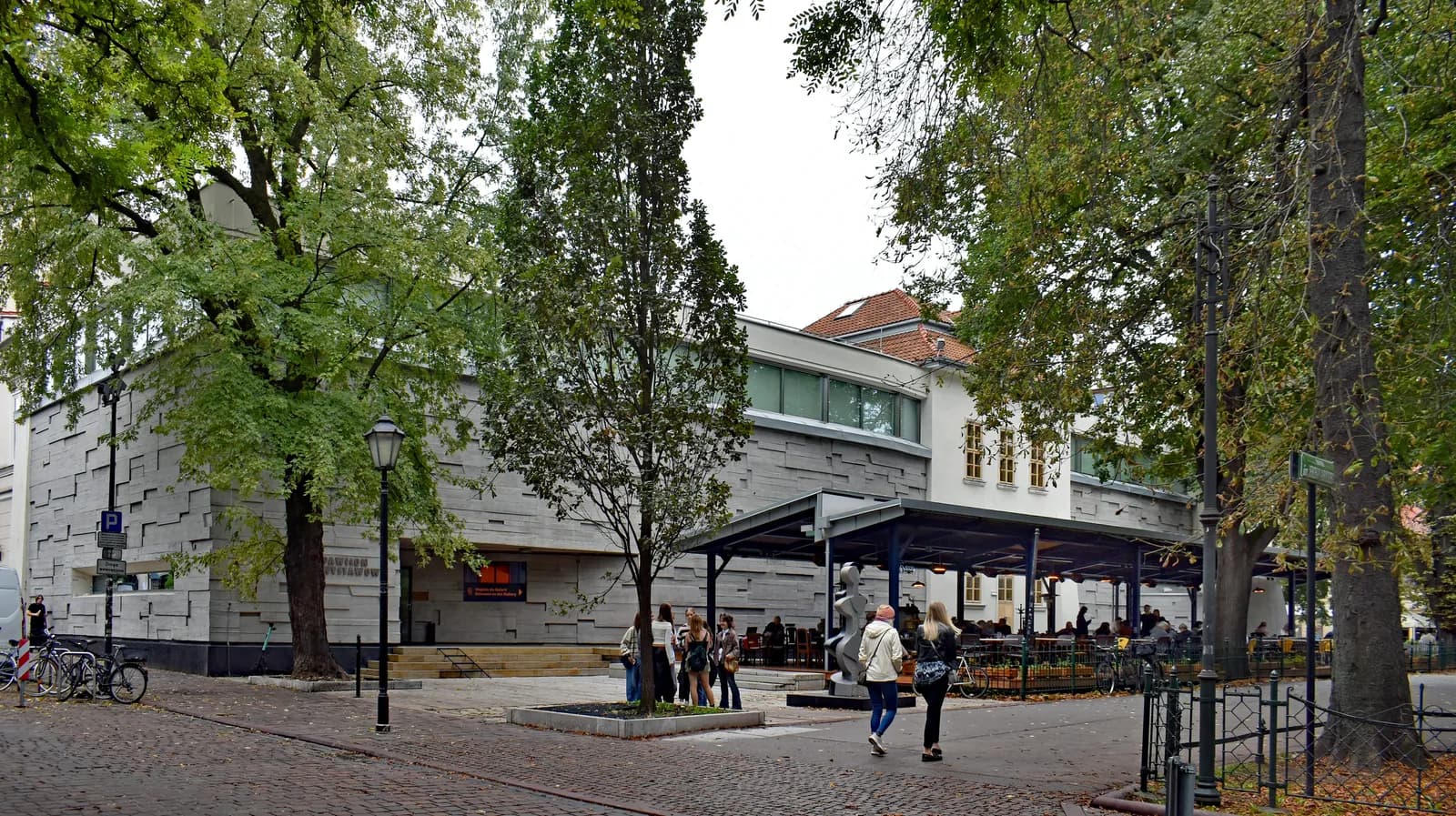
Instead of decorative details and elegant glazing, the new gallery presented raw concrete, geometric forms and a deliberately austere appearance. Its textured surface retained impressions from the wooden formwork used during construction.
Across Plac Szczepański, the Palace of Art represented a very different architectural language. Its Art Nouveau design celebrated ornament, beauty and historical continuity, while Bunkier Sztuki expressed the experimentation and reduction associated with postwar modernism.
The contrast became part of the building's meaning.
What was initially regarded by some as an unwelcome intrusion gradually became an architectural landmark in its own right. Today, Bunkier Sztuki is recognised as an important example of Polish late modernism and the only brutalist building within Kraków's historic Old Town.
From Exhibition Pavilion to Independent Gallery
The institution's artistic identity developed alongside its architectural reputation.
In 1994, Bunkier Sztuki gained formal status as an independent municipal gallery. The following year, it adopted its present name, Galeria Sztuki Współczesnej "Bunkier Sztuki".
This period marked a greater emphasis on its own curatorial voice and on contemporary artistic experimentation. The gallery increasingly supported both emerging and established artists while opening its programme to international contemporary practice.
Its collection now contains approximately 445 works by 170 artists. Rather than concentrating solely on traditional forms, it reflects the changing nature of contemporary art, including painting, sculpture, photography, video, installation, digital media and mixed techniques.
More than 980 exhibitions have been held at the gallery since its establishment, creating an institutional record of changing artistic practices and ideas.
The collection also places particular emphasis on artists connected with Kraków and on emerging practitioners, while themes such as memory, urban life and ecology have become part of its contemporary focus.
Preserving the Bunker for a New Generation
For almost six decades, the building operated without a comprehensive modernisation. By the 21st century, its infrastructure required significant intervention, including improvements to climate control, accessibility, exhibition facilities and storage.
A competition for the building's redesign and extension was announced in 2016, with the winning concept developed by KWK Promes, the architectural studio of Robert Konieczny.
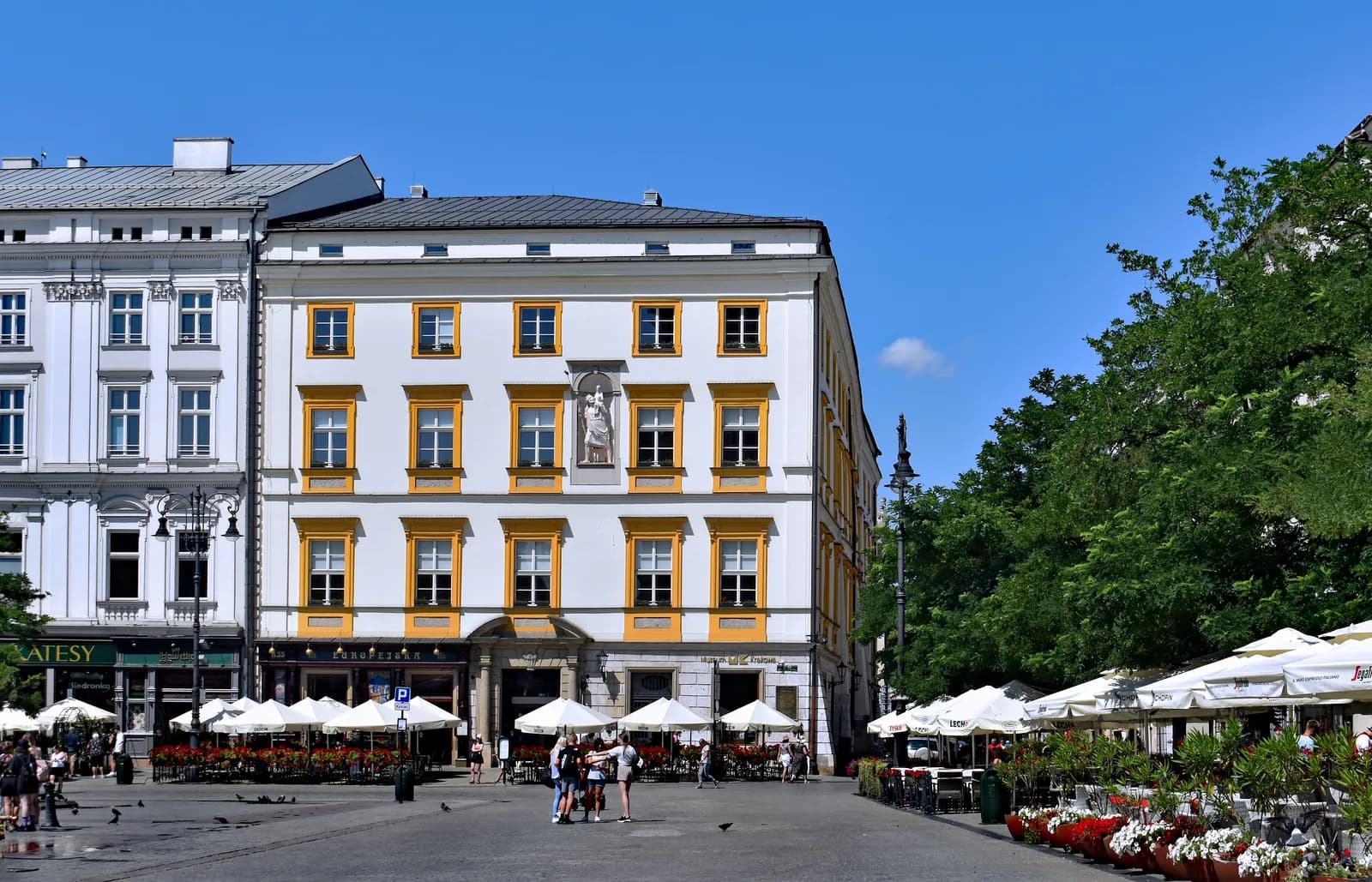
Renovation took place between 2021 and 2024. During the work, Bunkier Sztuki temporarily operated from Potocki Palace at Rynek Główny 20, allowing its programme to continue while the historic building underwent transformation.
The completed project retained the character that had made Bunkier Sztuki distinctive while introducing modern systems and additional exhibition space underground. Accessibility was improved, climate control was upgraded and the Bunkier Café was restored, including its historic outdoor location.
The gallery reopened in its renewed home and marked its 60th anniversary in 2025.
Bunkier Sztuki's significance now lies in the relationship between its architecture and its programme. The concrete building once challenged the historic surroundings of Plac Szczepański. Today, its uncompromising form feels inseparable from an institution devoted to artistic experimentation, new ideas and contemporary creative practice.
What began as a controversial intervention has become part of Kraków's cultural landscape, demonstrating how a building designed to break with tradition can itself become an important part of the city's architectural and artistic heritage.
Visitor Information
Bunkier Sztuki Gallery of Contemporary Art
Address: Plac Szczepański 3a, Kraków
Opening hours: Tuesday–Sunday, 12:00–19:00
Closed: Monday