There are few buildings in Kraków that make quite such an impression from across the Vistula as Hotel Forum.
Its long concrete façade follows the curve of the river, while rows of projecting balconies give the building a distinctive, almost sculptural appearance. Across the water, Wawel rises above the historic city. Behind it sits a very different Kraków, one shaped by the architecture and ambitions of the final decades of communist Poland.
Hotel Forum opened in 1988. It was designed as a modern international hotel, but its life as a hotel lasted only 14 years. Today, its spaces have found new uses, while the building itself has become an increasingly important part of the conversation about Kraków's modern architectural heritage.
A hotel for a new Poland
Hotel Forum was conceived during the major modernisation programme of the 1970s, when Poland was investing heavily in new hotels, transport infrastructure and public buildings.
The architectural project was led by Janusz Ingarden, working with Stanisław Drabczyński, Marzanna Miłkowska and Piotr Miłkowski.
The hotel was intended to provide Kraków with a large, contemporary facility for visitors from Poland and abroad. Its 278 rooms were accompanied by conference facilities, restaurants, a casino, bar and swimming pool.
Yet by the time the building finally opened in 1988, the country was changing rapidly.
The economic problems of the 1980s had transformed the circumstances in which Forum was built, and within a year Poland would hold partially free elections. The hotel therefore opened at the end of one era and entered another almost immediately.
A striking piece of Kraków architecture
Forum's location was never an afterthought.
Built beside the Vistula in Ludwinów, the hotel was designed to work with the riverside landscape while retaining views towards some of Kraków's most recognisable landmarks. Its curved form follows the river, while rows of projecting balconies and recessed sections give the building its distinctive rhythm.
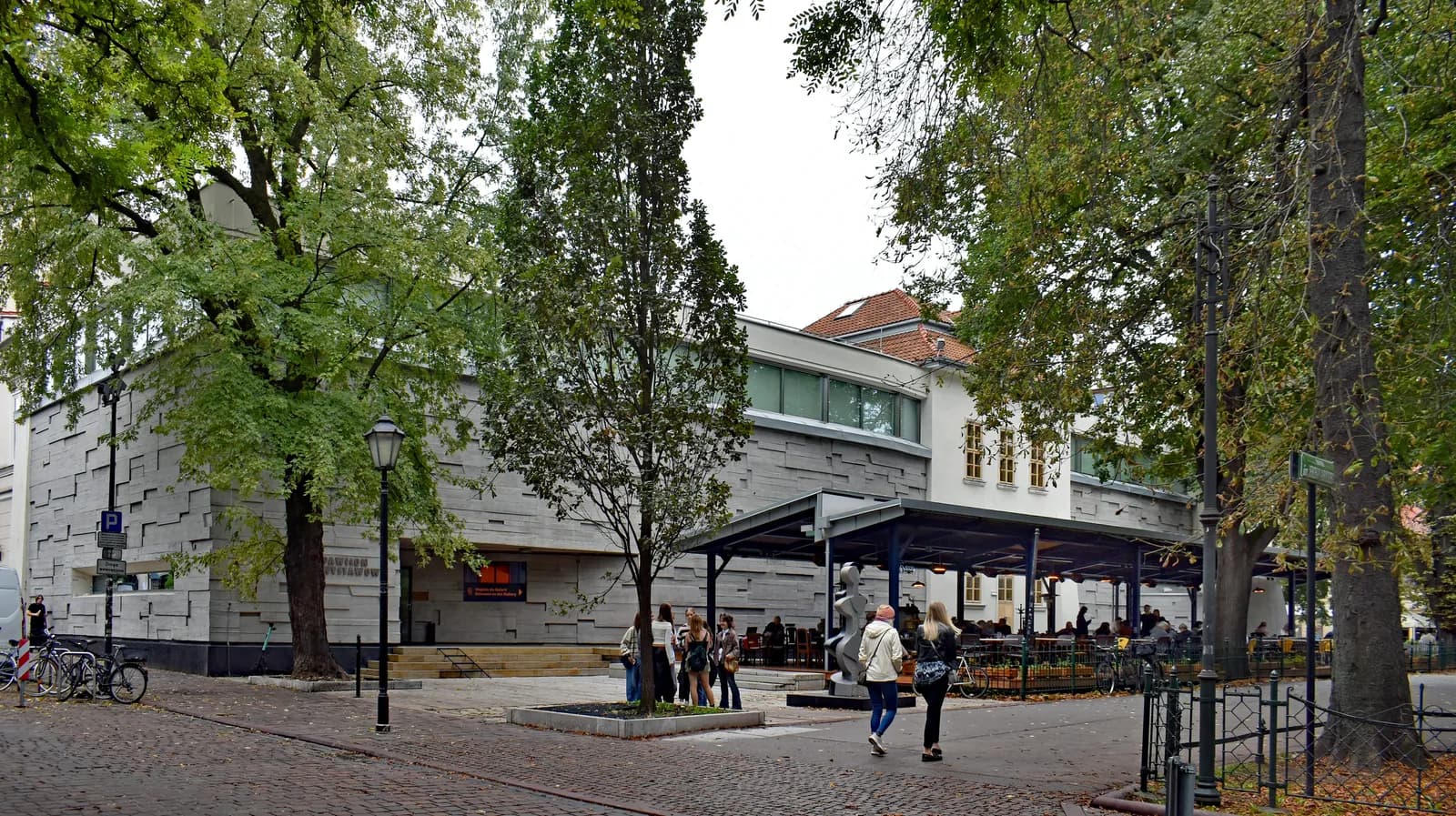
The substantial concrete structure gives Forum the heavy, sculptural appearance associated with brutalism. This architectural movement favoured exposed materials, strong geometric forms and the honest expression of a building's structure. The term comes from the French béton brut, meaning "raw concrete".
Forum is not a pure example of brutalism. It is more accurately described as a late-modernist building with brutalist characteristics, reflecting the architectural thinking of the period in which it was designed.
When it was new, Forum's scale and appearance attracted criticism from some quarters, particularly in a city famous for its historic architecture. Today, however, post-war and late-communist architecture is increasingly being reassessed, and Forum is recognised as an important example of Kraków's late modernism.
From hotel to empty landmark
Forum's original life was short.
The hotel closed in 2002, just 14 years after opening. For a time, the enormous riverside building stood largely unused, its future uncertain.
That period added another layer to Forum's identity. The building became a familiar sight for photographers, architecture enthusiasts and urban explorers, while debates continued about redevelopment, preservation and the possibility of demolition.
Meanwhile, Kraków's relationship with the Vistula was changing. The riverfront was becoming an increasingly popular place for walking, cycling, meeting friends and spending summer evenings.
Forum gradually found itself at the centre of this new riverside culture.
The people who remember Forum
The hotel's story is not only about concrete, architecture and changing ownership.
More than 600 people worked at Hotel Forum during its years as a hotel. Former employees, known as "Forumowicze", have preserved photographs, documents and memories from the building's working life.
Their recollections provide a glimpse into an unusual workplace during a remarkable period in Polish history. Forum brought together employees and guests at a time when international travel and contact with the outside world were becoming increasingly significant.
Some of the hotel's surviving history exists because former staff members kept hold of it.
One example is the hotel's commemorative guest book, saved by technical manager Zbigniew Galuba. With parts of the original hotel archive missing, these personal collections have become valuable records of Forum's past.
A new life beside the river
Forum has gradually moved away from its former identity as a single hotel.
One of the most memorable chapters was Forum Przestrzenie, which helped establish the building as a popular social destination beside the Vistula. Its riverside restaurant and events became closely associated with Kraków's contemporary summer culture.
Forum Przestrzenie closed in March 2024, but the building's story continued.
In July 2025, Forum Fun & Food opened, bringing bowling, billiards, arcade games, food and bars into a 3,000-square-metre space. The venue also has a terrace overlooking Wawel.
Higher up in the building, Panorama Forum has introduced a restaurant and rooftop bar, making use of the views that were always one of Forum's greatest assets.
Another current project, Forum Horyzonty, combines food, drinks and event space.
The result is a very different Forum from the one that opened in 1988. Instead of a conventional hotel, the building now contains a collection of contemporary leisure and hospitality spaces.
An evolving Kraków landmark
Standing beside the Vistula today, Hotel Forum can feel like several different periods of Kraków occupying the same view.
There is the historic city across the river, represented by Wawel and the old skyline. There is the ambitious modernism of the 1970s and 1980s in the concrete structure itself. And there is the contemporary riverside, with cyclists, restaurants, terraces and people gathering along the water.
That combination is what makes Forum so interesting.
It was built for a Poland that no longer exists, closed before the building had reached old age, and spent years uncertain about its future. Now parts of it are busy again, while its history is being documented and reconsidered.
For anyone interested in Kraków beyond the medieval centre, Forum offers a glimpse of a city that was trying to reinvent itself long before the current riverside revival began.
And from the opposite bank of the Vistula, its unmistakable concrete silhouette remains one of the best places to start that story.
See more: The Enchanted Pigeons of Kraków: The Knights Still Waiting in the Square
Image credit: Błażej Pindor, Wikimedia Commons, CC BY-SA 3.0 / Grawiton, Wikimedia Commons, CC BY-SA 4.0 / Zygmunt Put, Wikimedia Commons, CC BY-SA 4.0