Kraków's history is not contained within a single building. Across the city, historic sites form a museum network that tells its story in place.
The Museum of Kraków, officially known as the Historical Museum of the City of Kraków, has spent more than 125 years documenting the city's changing identity. Its origins lie in 19th-century efforts by local historians and citizens to gather and protect Kraków's historical memorabilia.
In 1890, the Archive of Old Acts for Kraków City began collecting materials, followed by the organisational support of the Society of Kraków's History and Monuments Amateurs in 1897. The Historical Museum of the City of Kraków was formally established by a City Council resolution on 2 June 1899.
Its original purpose was clear: to gather and protect historical materials connected with Kraków's life and culture from its earliest history. What began as a branch of the Archive of Old Acts would gradually develop into one of the city's most important cultural institutions.
A Museum Built Around Kraków's Story
The museum's approach is distinctive because it does not depend on one central building. Instead, its branches explore different periods, communities and aspects of Kraków's history, often from locations directly connected with the stories being presented.
This structure turns the city itself into part of the museum experience.
Today, the Museum of Kraków operates 19 branches across the city, alongside a further location in Zakopane. Together, they attract approximately 1 million visitors each year.
Its collections contain around 780,000 items, including archaeological discoveries, historical documents, photographs, military memorabilia, artworks, coins and medals, weaponry, everyday objects and material connected with Kraków's guilds and communities.
The museum's work also extends beyond exhibitions. Educational programmes, conservation, research and community engagement form part of its wider role in documenting and interpreting the city's past.
From Palace to Underground Archaeology
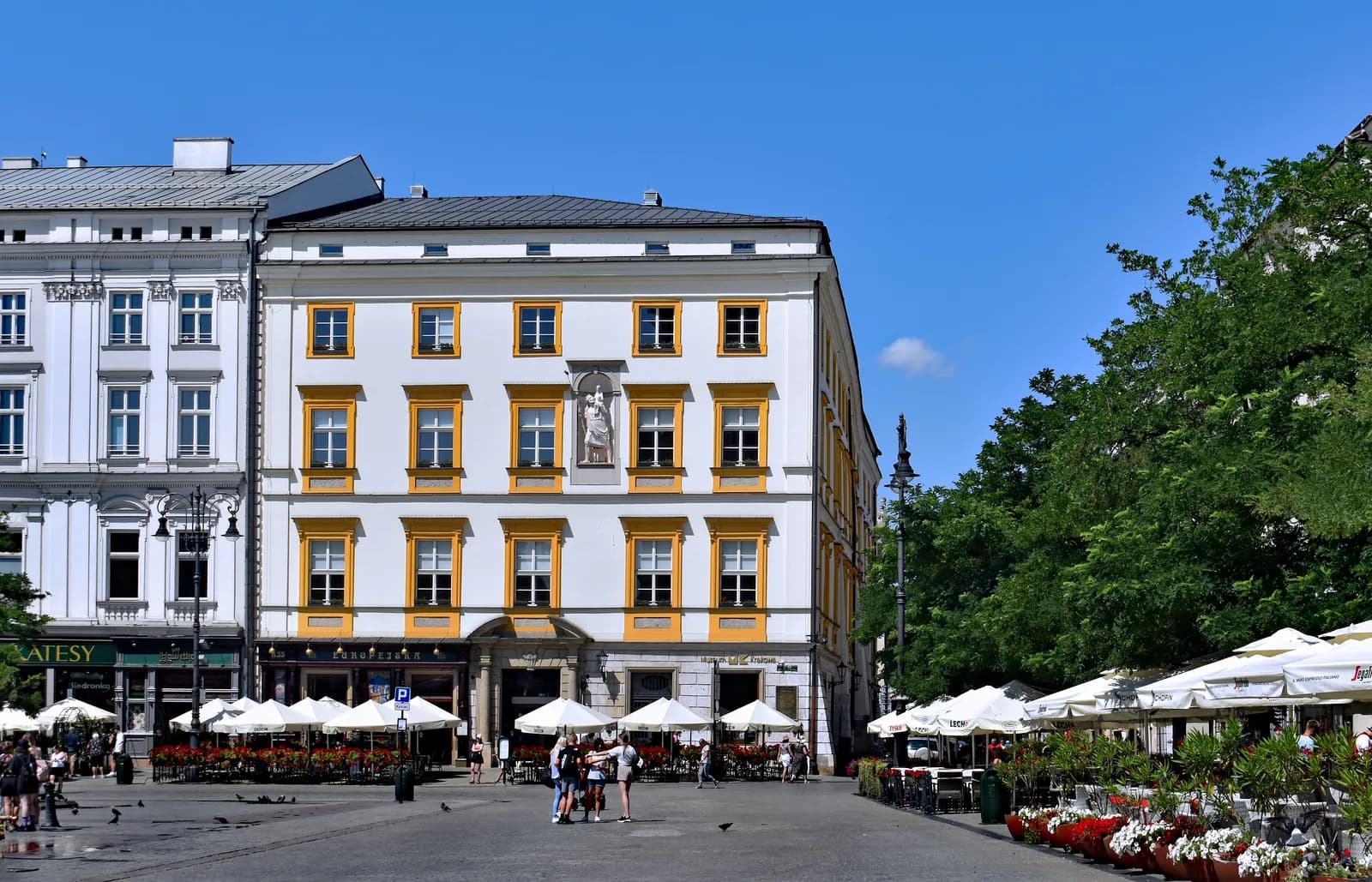
Among the most recognisable locations is Krzysztofory Palace at Main Market Square 35. The historic baroque mansion features arcaded loggias, 18th-century stucco work and murals dating from the 18th and 19th centuries.
The building has also accumulated its own folklore, including stories of underground chambers, hidden treasure and an alchemist's laboratory. Extensive restoration completed in the 2020s modernised the palace while retaining its historic character.
Below the Main Market Square, a very different museum environment awaits.
Rynek Underground opened in 2010, creating an approximately 4,000-square-metre archaeological and multimedia exhibition beneath one of Kraków's most recognisable public spaces. The exhibition, Following the Traces of European Identity of Kraków, combines archaeological material with multimedia elements designed to evoke the city of centuries ago.
Elsewhere, the museum's locations continue to connect objects and stories with their original surroundings. The medieval Town Hall Tower, the Barbican, the Old Synagogue, the Eagle Pharmacy, Hipolit House and Oskar Schindler's Enamel Factory each present different aspects of Kraków's past.
The Eagle Pharmacy recalls the history of the Kraków Ghetto, while Schindler's Enamel Factory focuses on the wartime history of the factory and the lives saved there. Together with the museum's other branches, these locations demonstrate why Kraków's history is difficult to separate from the buildings and streets in which it took place.
From its beginnings in the 19th century to its present network of historic locations, the Museum of Kraków has developed a model in which the city is not simply the subject of the collection. It is part of the collection itself.