Discover the history, legend and living tradition of the Kraków Lajkonik, the city’s iconic annual procession that has delighted generations and remains one of Poland’s most cherished cultural celebrations.
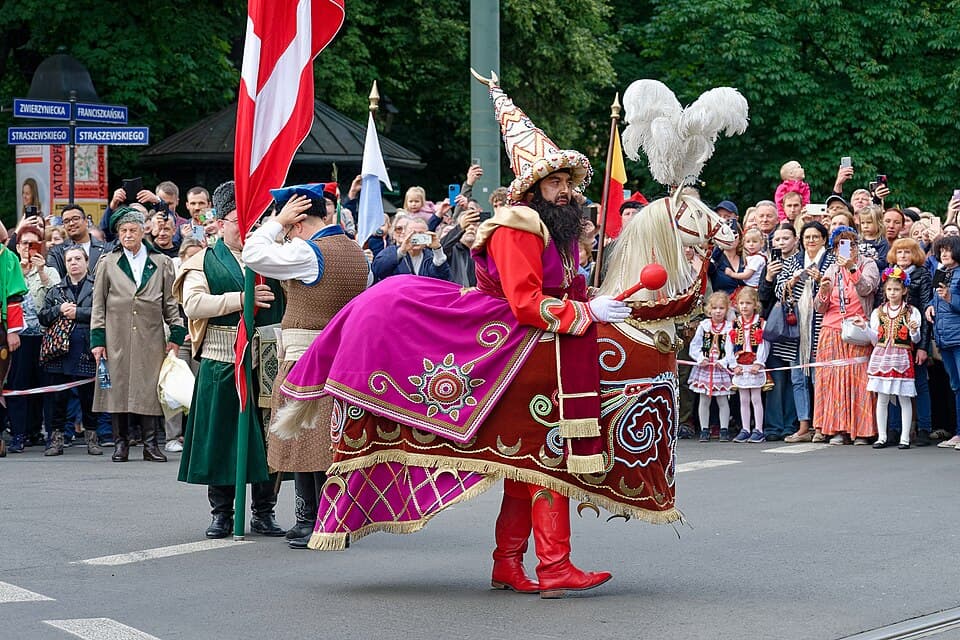
Long before the crowds gather in Kraków’s Main Market Square, people begin lining the streets of Zwierzyniec. Families arrive early to secure their favourite viewing spots, musicians tune their instruments and children wait patiently for the moment they have been promised all year. Then, to the sound of traditional music and enthusiastic applause, a bearded horseman in a feathered hat appears, dancing through the streets atop his brightly decorated hobby horse.
For a few hours each year, the Lajkonik takes centre stage.
To first-time visitors, it is an unforgettable spectacle filled with colour, music and theatrical pageantry. For Kraków residents, however, it is something far deeper. The annual procession is a tradition that connects the modern city with its folklore, celebrates the identity of the historic Zwierzyniec district and reminds people that some customs are worth preserving simply because they belong.
Where History Meets Legend
Few Kraków traditions are as closely tied to local legend as the Lajkonik.
The story most people know begins in 1287, when Mongol forces, often referred to historically as Tatars, advanced towards the city. According to legend, local Vistula raftsmen, known as włóczkowie, discovered the invaders’ camp near present-day Zwierzyniec and launched a surprise attack while the enemy slept. Victorious, one of the raftsmen dressed himself in the defeated commander’s robes and rode triumphantly into Kraków, where he was greeted with celebrations by the city’s grateful residents.
It is a story that has been passed from generation to generation and remains an important part of Kraków’s cultural identity.
The historical record, however, is less straightforward.
While historians agree that the Lajkonik tradition is centuries old, the earliest surviving written references to the procession date from the eighteenth century. The famous tale linking it directly to the Tatar invasion was not recorded until 1820, leading many researchers to believe the celebration probably evolved from older folk customs practised by the raftsmen of Zwierzyniec before becoming associated with the medieval legend.
Rather than diminishing the tradition, this blend of history and folklore only adds to its appeal. Like many of Europe’s oldest customs, the Lajkonik survives because people have continued to tell its story, whether every detail can be proven or not.
A Celebration That Still Belongs to the City
Unlike some historic festivals that have gradually become performances for tourists, the Lajkonik remains firmly rooted in local life.
Each year, on the first Thursday after the Feast of Corpus Christi, the procession begins near the Norbertine Sisters’ Convent in Zwierzyniec before making its way through the western districts and into the heart of Kraków. Thousands of residents gather along the route, joined by visitors from across Poland and around the world.
The atmosphere is festive without feeling staged. Traditional musicians lead the procession, attendants in historic costume accompany the Lajkonik and spectators cheer as the familiar figure dances through the crowd.
Perhaps the most anticipated moment comes when the Lajkonik raises his ceremonial mace.
Being tapped gently on the shoulder is said to bring good luck for the year ahead, and each year plenty of willing volunteers step forward in the hope that the old tradition still holds true.
Whether taken seriously or simply enjoyed as part of the occasion, it is a ritual that brings smiles to faces, young and old.
More Than an Elaborate Costume
The Lajkonik’s appearance is instantly recognisable.
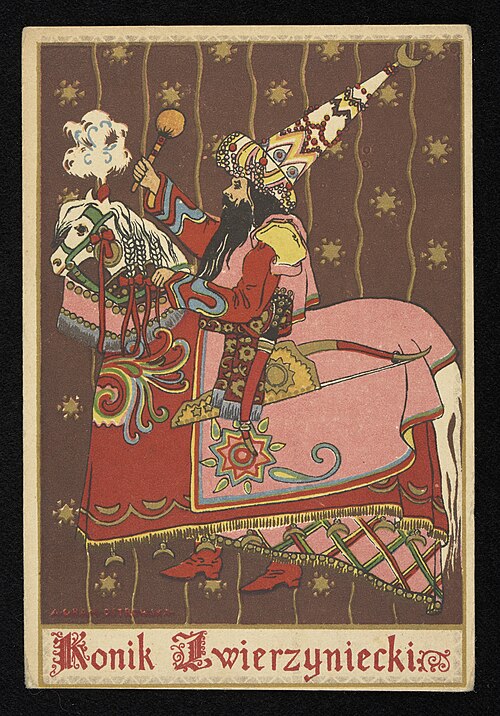
His embroidered robe, feathered hat, flowing beard, bright red boots and decorative wooden horse have become enduring symbols of Kraków itself. Although inspired by historical depictions of Tatar horsemen, today’s costume reflects centuries of artistic interpretation rather than an attempt to recreate military dress with historical precision.
The figure appears far beyond the annual procession. It can be found on souvenirs, artwork, promotional materials and cultural events throughout the city, serving as a visual reminder of Kraków’s unique identity.
Few symbols are so closely associated with a single place.
Why the Lajkonik Still Matters
In a rapidly changing world, traditions survive only when communities continue to embrace them. The Lajkonik has endured not because it has remained frozen in time, but because each generation has found value in keeping it alive.
Children who once watched from their parents’ shoulders return years later with families of their own. Long-time residents greet the procession as an old friend, while visitors discover a side of Kraków that cannot be found inside museums or guidebooks.
The Lajkonik is not simply a colourful parade or an entertaining afternoon in the city centre. It is a reminder that heritage is something to be experienced as well as remembered. Through music, storytelling and shared celebration, Kraków continues to honour a tradition that has become inseparable from the city’s identity.
Whether its origins lie in documented history, enduring legend or somewhere between the two, the Lajkonik remains one of Poland’s most distinctive living traditions. More than three centuries after it first appeared in written records, it continues to bring people together, preserving not only a piece of Kraków’s past but also its enduring sense of community.
Click here for more historical facts about Krakow!